

Animaspace: Conversations with Robots as Existential and Ethical Inquiry
In this talk, Angelina Kozhevnikova (Animaspace) will share how her artistic practice constructs conversations between humans and robots through continuous co-regulation, where both become part of a joint cognitive system unfolding across time, space, and embodied presence.
Date: Sunday, Nov 16, 2025 12:00 PM EDT
Abstract
I’ll walk through four conversations:
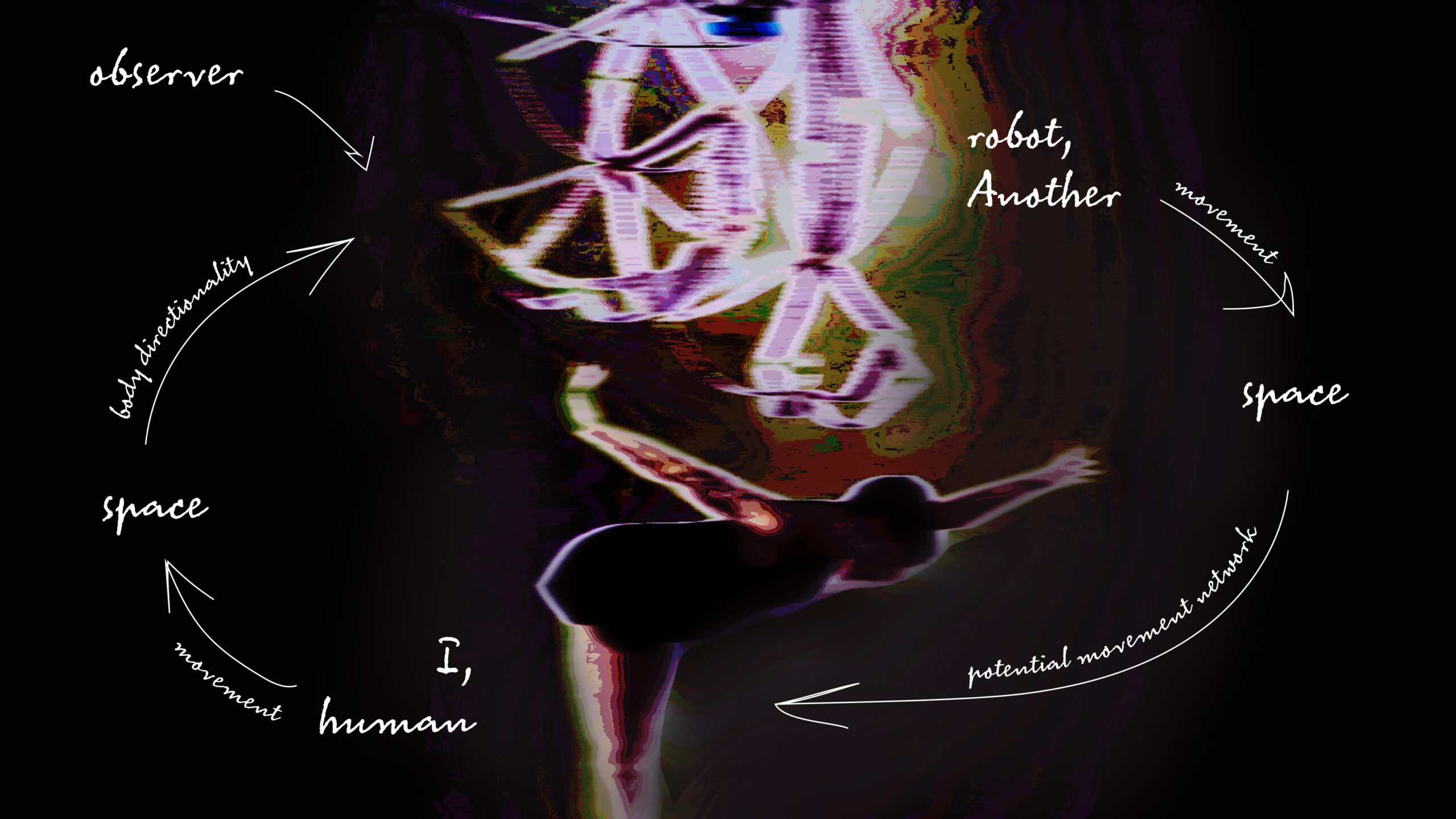
1. Conversation of Presence (I/Another): Conversation between the human body (I), the robotic body (Another), and space (a potential movement network), with cognition distributed across the three.
2. Conversation of Sensation ([Skin]): Conversation between a robotic wearable’s inner patterns and rhythms, the human skin, and other robotic wearables.
3. Conversation of Making (Robots4Commons): Conversation between an industrial robot, Kapla towers, and children.
4. Conversation of Freedom (Coordinated°): Conversation between drones, opposition, and authoritarian regime(s).
These conversations open two main questions:
Existentially: How do we discover ourselves through encountering an other that doesn’t conform to us, one that reveals who we are in ways we can only understand intuitively?
Ethically: What does care mean when it’s not something we give, but a capacity we maintain together across differences in distributed systems with human and non-human actors?
I’ll close with Relational Responsibility, inviting the community to reflect on what a gentle machine might mean in the context of healthcare and planetary health for a new artwork.
Participants Bios:
Angelina Kozhevnikova is a transdisciplinary artist and researcher whose practice Animaspace explores how humans, robots, and environments co-shape one another through interactive installations and performances. Her work reimagines dominant technological imaginaries, proposing relational and embodied alternatives grounded in presence and co-agency. Alongside her artistic practice, she researches Human–Robot Collaboration at TU Delft.
Her projects have been exhibited internationally and supported by major Dutch and European cultural and academic institutions. She is the winner of the Edigma Semibreve Award, AUAS Research of the Year, and a Lumen Prize nominee.


